


Basement Conversion Into A Habitable Space – Paris, France
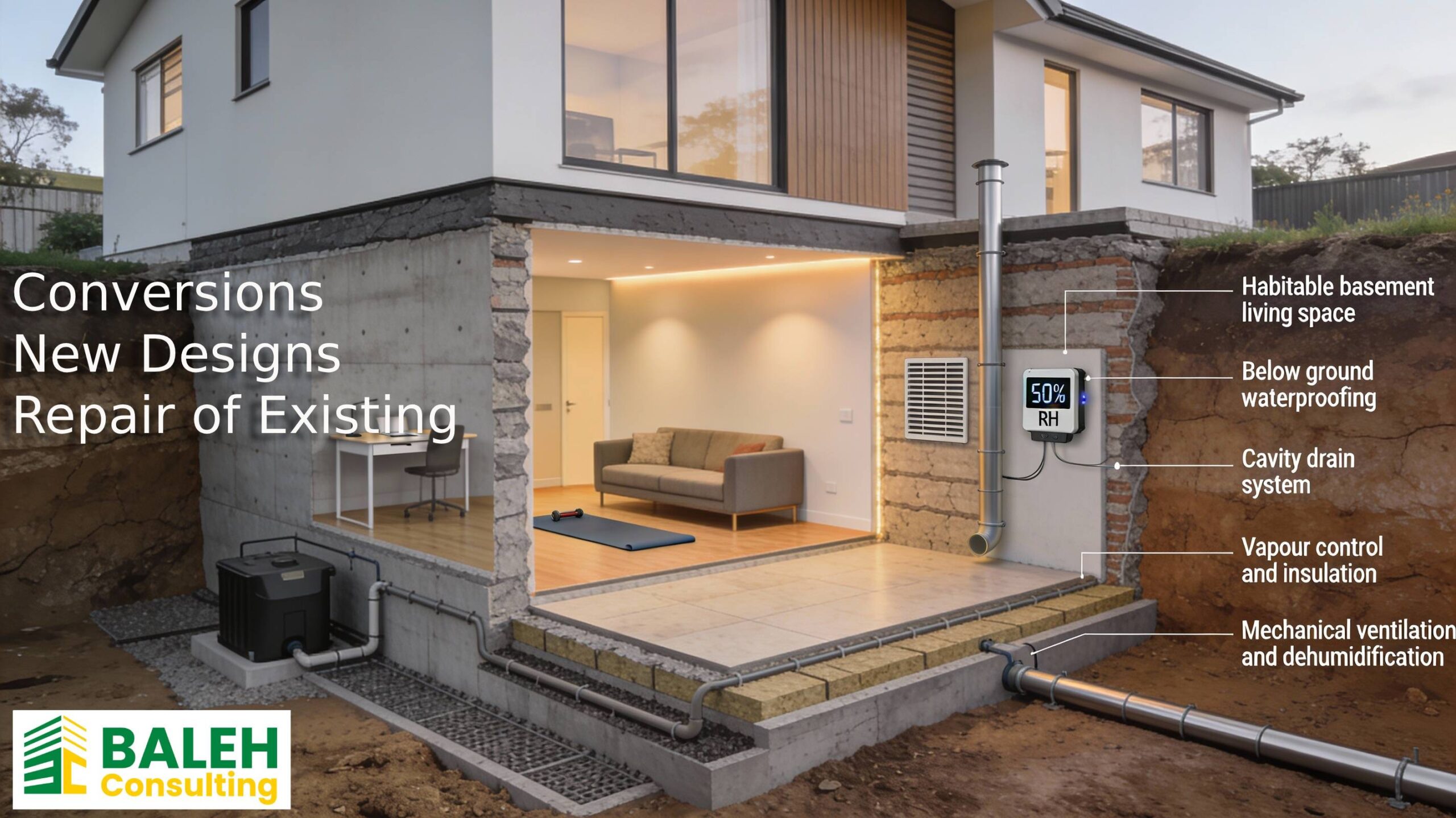
Baleh Consulting was engaged to inspect and provide specialist design advisory services for the conversion of an existing basement into a habitable space in Paris, France. The project involved transforming a below-ground structure within a dense urban environment, where groundwater management, moisture control, ventilation, and access to natural light are critical to long-term performance and occupant wellbeing.
Although the project is located in France, the design methodology reflects internationally recognised best practice and aligns closely with the principles adopted under the Australian NCC (2022) for moisture management, health, and amenity. The waterproofing design was developed in AutoCAD and coordinated with architectural and building services elements to ensure constructability and compliance.
Design Standards and Regulatory Framework
The basement conversion was designed in accordance with:
- BS 8102:2022 – Protection of below ground structures against water ingress
- Relevant French building and environmental regulations
- NCC-aligned principles for moisture management, ventilation, and habitable space performance
BS 8102:2022 was adopted as the primary technical reference due to its structured, risk-based approach to below-ground waterproofing. This methodology closely aligns with NCC requirements, particularly in relation to managing water, condensation, and mould risks in habitable spaces.
Integrated Waterproofing and Environmental Design
The design approach recognises that basement waterproofing cannot be treated as a single product or barrier. Instead, it must be part of an integrated system that manages water, air, and moisture throughout the life of the structure.
Key elements of the design include:
1. Below-Ground Waterproofing Strategy
A risk-assessed waterproofing solution was developed based on the structure type, anticipated groundwater conditions, and intended habitable use. The system was selected to provide long-term protection while allowing for inspection, maintenance, and repair where required.
2. Wall Cavity Drainage Systems
Wall cavity drainage was incorporated to manage water ingress and relieve hydrostatic pressure. This system provides controlled water collection and discharge, reducing reliance on barrier-only solutions and improving durability over the service life of the building.
3. Mechanical Ventilation and Humidity Control
Mechanical ventilation was designed to control internal humidity levels, reduce condensation risk, and maintain indoor air quality. This is particularly critical in basement environments and directly aligns with NCC intent regarding occupant health, mould prevention, and habitable space performance.
4. Introduction of Natural Light
Natural light was strategically introduced to improve amenity, support occupant wellbeing, and enhance the overall usability of the space. This element was carefully coordinated with waterproofing and structural detailing to avoid creating new points of water ingress.
Project Outcomes and Key Learnings
This project highlights the importance of early specialist involvement when converting basements into habitable spaces. In dense urban settings, below-ground works carry a higher risk profile and require careful coordination between waterproofing, structure, ventilation, and architectural design.
By applying a structured, standards-based approach and integrating waterproofing with environmental controls, basement conversions can deliver safe, durable, and healthy living environments. The principles demonstrated on this project are directly transferable to similar basement conversions in Australia and anywhere else around the world, particularly as urban densification increases and below-ground spaces are more frequently repurposed for habitable use.
Design, Inspection & Advisory:
Hacène Baleh (LinkedIn Page)
Baleh Consulting – Below-Ground Waterproofing Specialists (LinkedIn Page)
29/01/2026