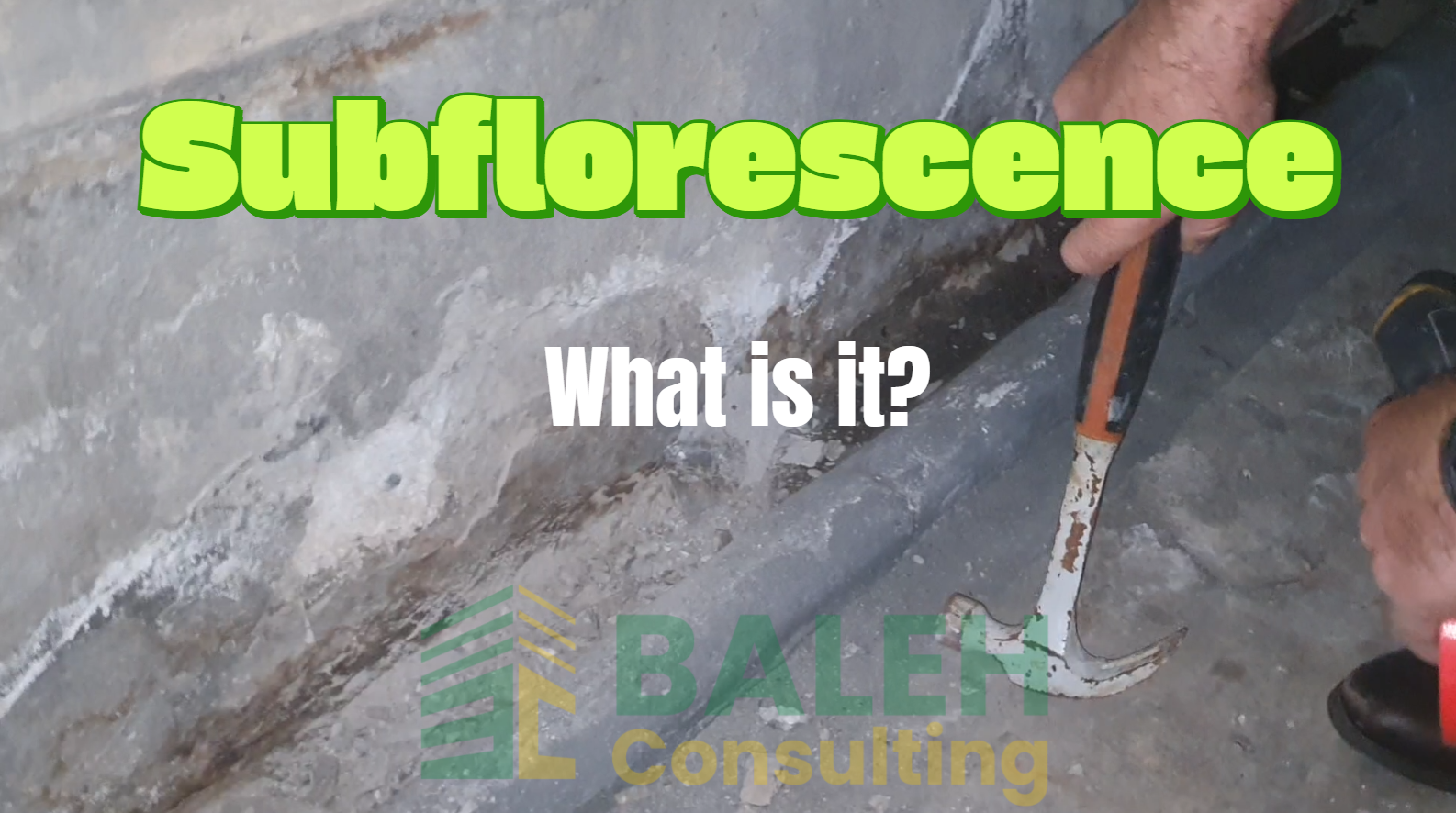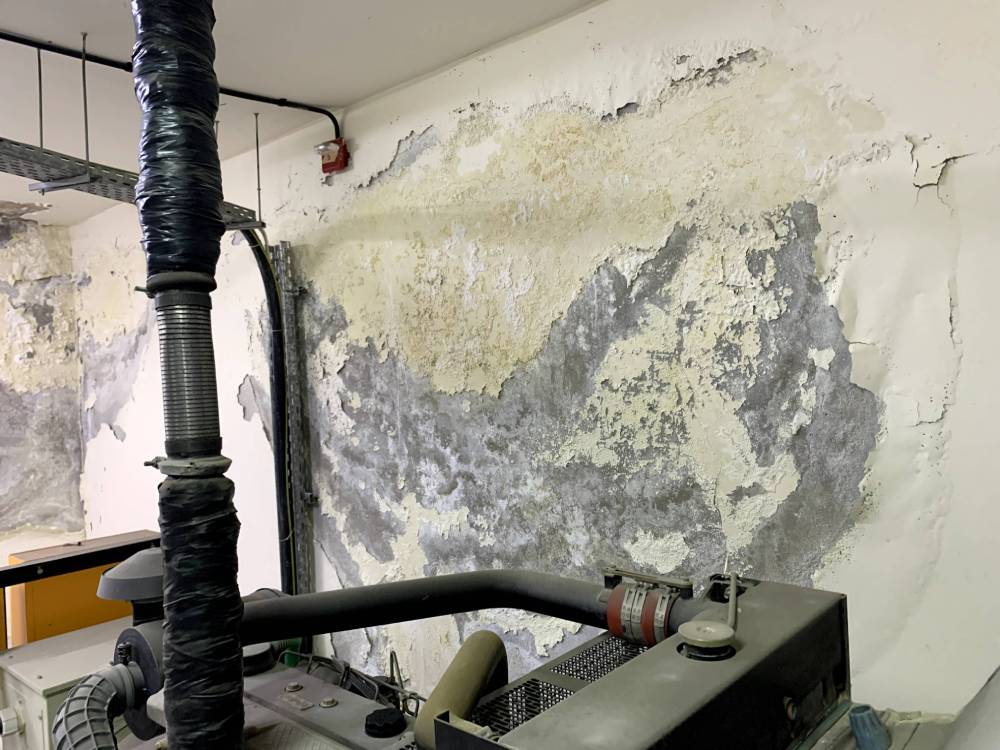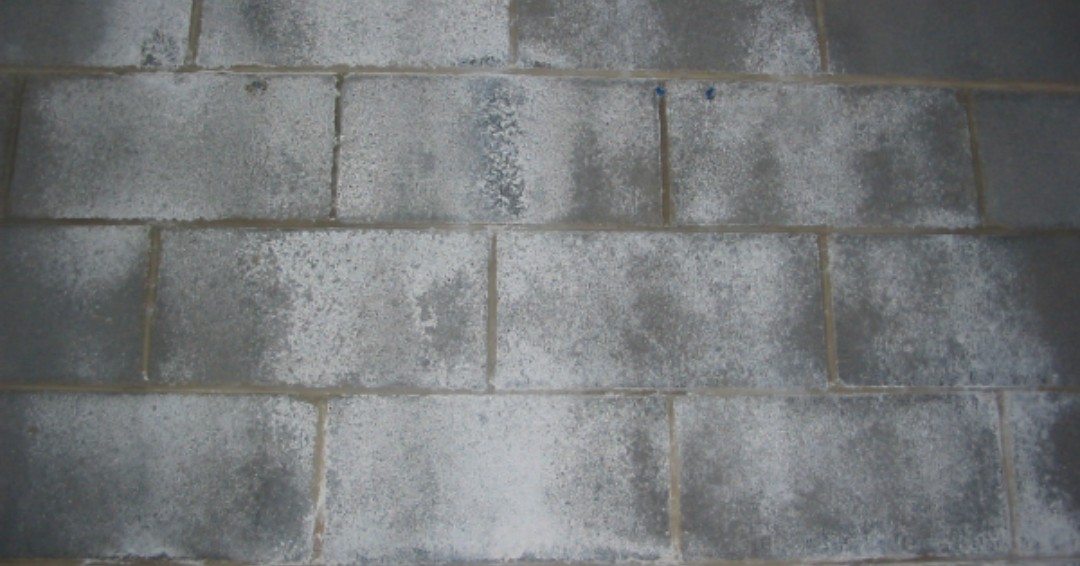



Why Many Misunderstood Grade 2 in BS 8102:2022?
One of the biggest industry misconceptions is that people are still interpreting BS 8102:2022 using definitions carried over from older editions of the standard.
1. Grade 2 Requirements (Internal Condensation Tolerable)
Under earlier interpretations of BS 8102:2009, a “Grade 2” environment was commonly understood as a space where:
- No free water penetration was acceptable
- Some dampness could be tolerated
- Ventilation might be required
However, under BS 8102:2022, this older interpretation aligns more closely with what is now effectively described as Grade 1b.
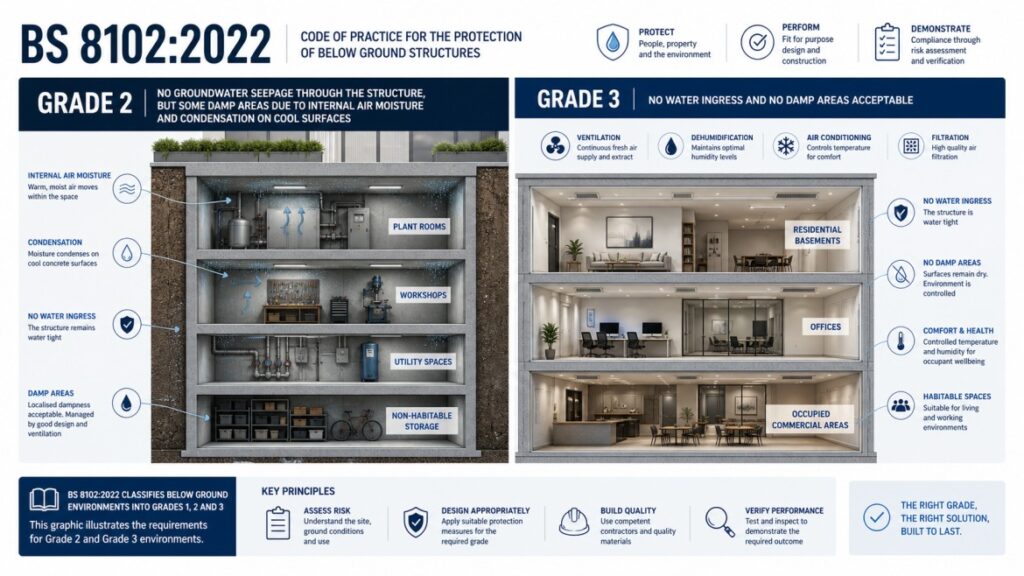
The current Grade 2 classification under BS 8102:2022 is significantly more stringent than many realise:
- No seepage or dampness is acceptable through the walls and slabs-on-ground
- Damp areas resulting from internal air moisture or condensation may be tolerable
- Measures may be required to manage vapour and condensation
Typical applications inc
lude:
- Plant rooms
- Workshops and some manufacturing facilities
- Utility spaces
- Below-Ground health and Wellbeing centres
- Non-habitable storage areas
Importantly, the dampness referred to in Grade 2 is not groundwater ingress through the structure, but moisture generated internally through humidity and condensation.
2. Grade 3 Requirements (Dry Environment)
Grade 3 environments require:
- No water ingress is acceptable
- No damp areas are acceptable
- Ventilation, dehumidification, or air conditioning appropriate to the intended use
Typical applications include:
- Offices, cellars, gyms, etc
- Commercial occupied spaces
- Basement and Below-ground Habitable spaces
The real difference between Grade 2 and Grade 3 is therefore not simply waterproofing performance, but the level of environmental control and internal dryness required.
3. Condensation Is Commonly Misdiagnosed
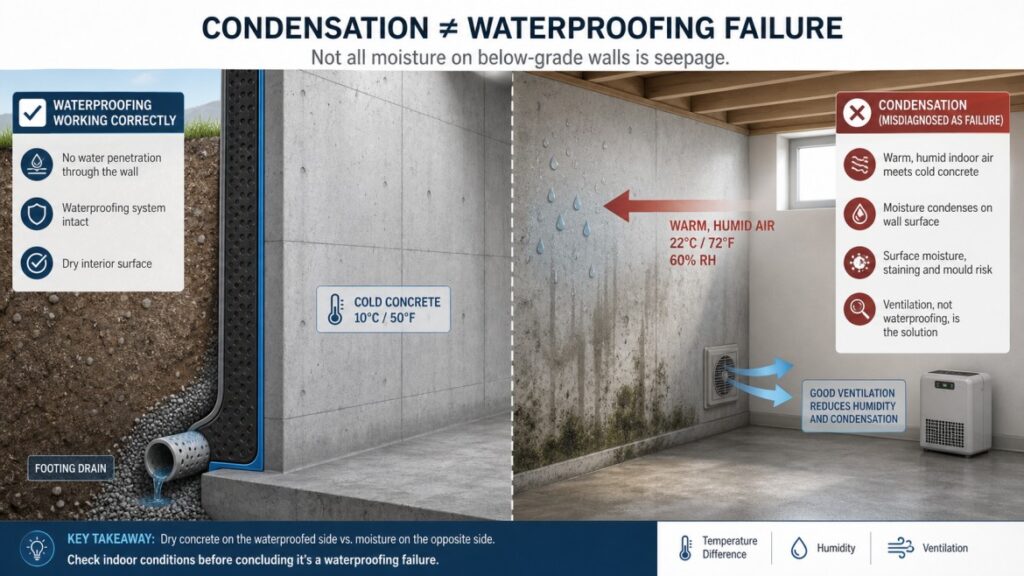
A frequent industry mistake is confusing condensation-related moisture with waterproofing failure.
Below-ground concrete surfaces are naturally cooler. When warm humid air contacts these surfaces, condensation can occur, resulting in elevated humidity, surface moisture, and potentially mould growth.
This may happen even when the waterproofing system is fully functional.
4. Archives and Sensitive Storage
Archives and highly sensitive storage areas were historically more aligned with Grade 4 (Totally Dry Environments) under BS 8102:1990, which was then captured in CIRIA Report 139, released in 1995.
These environments required strict temperature and humidity control beyond the typical intent of a standard Grade 3 space. Grade 4 will apply to art storage, microfilms and tapes, books, paintings, etc.
5. Waterproofing Requires a Holistic Approach
Successful below-ground waterproofing requires integration between:
- Structural design
- Concrete technology
- Drainage and water shedding
- Chemical and gas assessment in soil and water
- Waterproofing systems
- Vapour management
- HVAC and ventilation
- Intended occupancy
Focusing only on membranes while ignoring environmental control often leads to incorrect diagnoses and failed remediation strategies, particularly if Plan B is not incorporated.
At Baleh Consulting Pty Ltd, we specialise in the investigation, review, design, and Hold Point inspections for new builds and remedial projects of complex below-ground waterproofing systems across Australia.
6. Disclaimer:
This post provides general technical commentary only and should not be relied upon as project-specific advice. Always refer directly to BS 8102:2022, NCC requirements, the relevant Australian Standards, and relevant project consultants before making design or construction decisions.
We welcome your comments and feedback.
Written by Hacène Baleh
11 May 2026
Hacène Baleh LinkedIn Account.
Baleh Consulting LinkedIn Page.