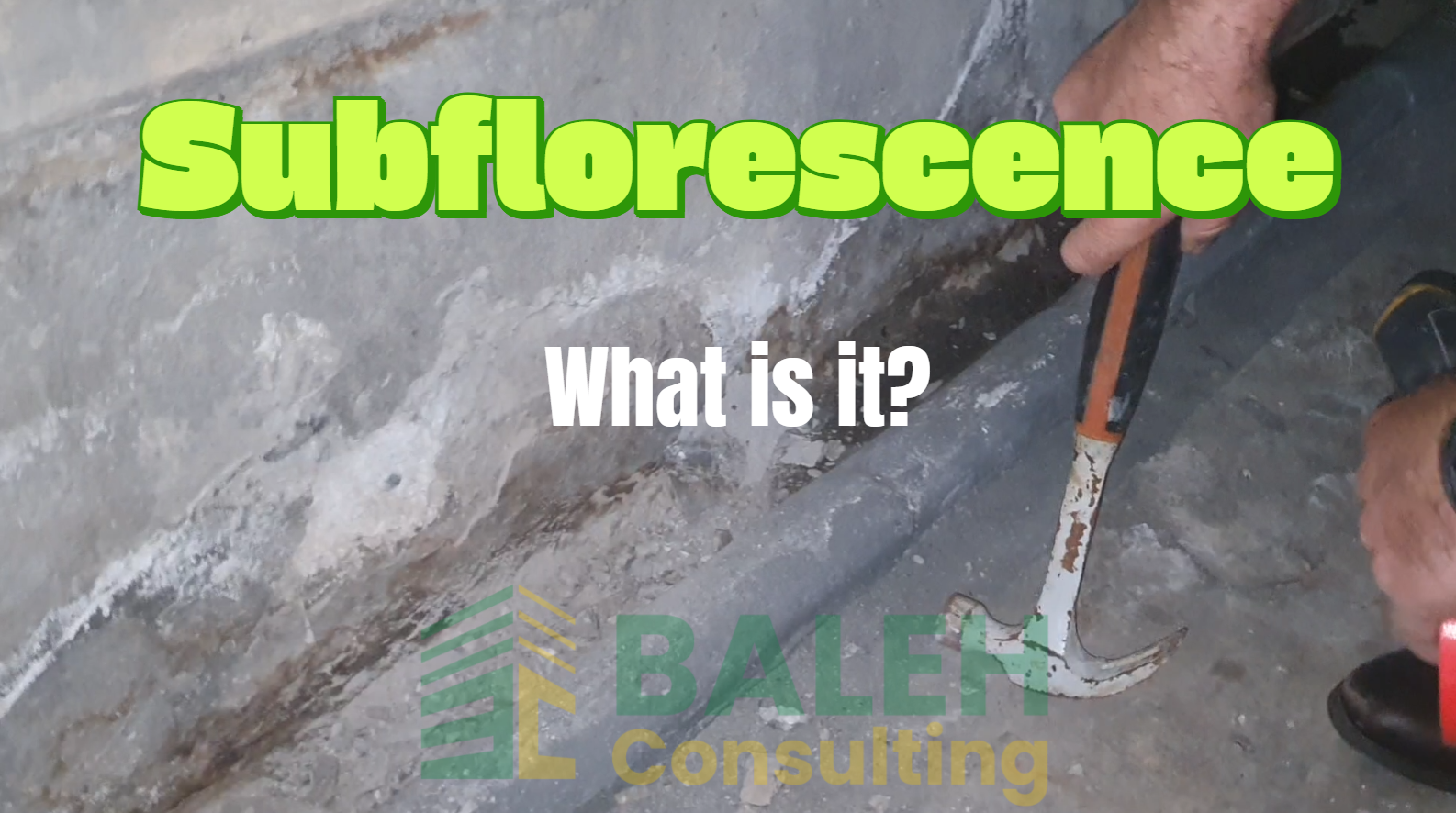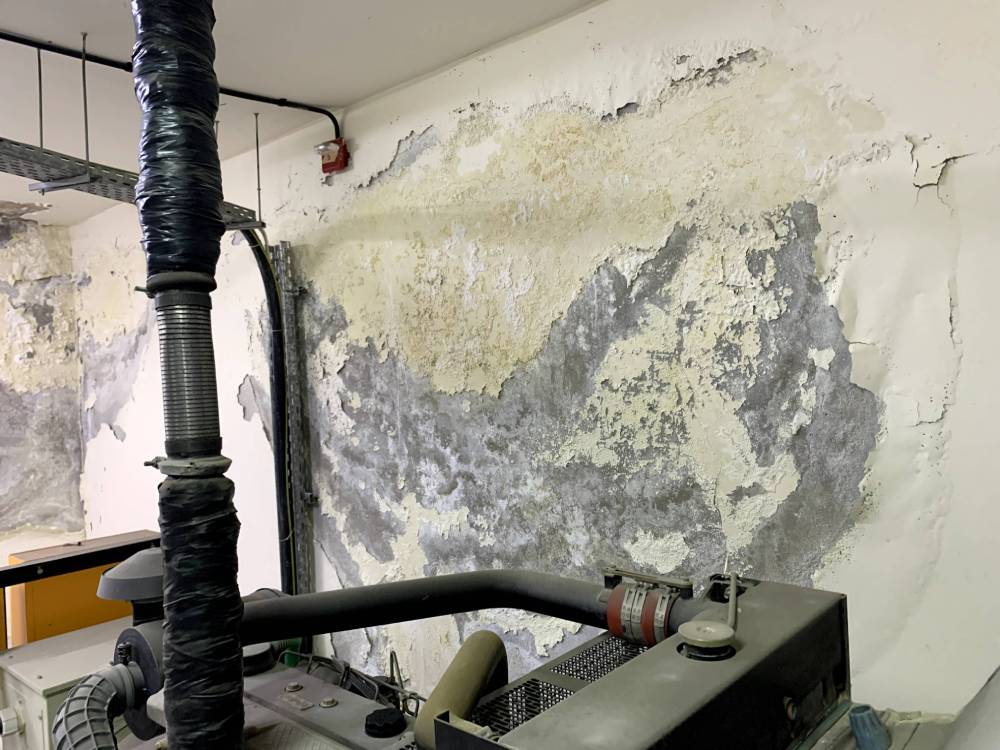



Have you ever looked at a concrete wall, basement, balcony, or retaining wall and wondered, “What is that white buildup?” 🧱
Many people automatically call it efflorescence, but that is not always correct.
In fact, not all white deposits on concrete are the same. Misidentifying them can lead to the wrong diagnosis, unnecessary repairs, and, in some cases, allow the real problem to continue undetected.
As forensic waterproofing consultants, one of the most common mistakes we encounter is the assumption that every white deposit is simply “efflorescence.” In reality, these deposits can reveal valuable information about moisture movement, waterproofing performance, concrete durability, and the overall health of a structure.
Generally, white deposits fall into two distinct categories.
1. Evaporation-Driven Salt Depos its
(Moisture Transport → Evaporation → Salt Crystallisation)
These deposits occur when water travels through the concrete, dissolving naturally occurring soluble salts. As the water evaporates, the salts crystallise.
The location where evaporation occurs determines the type of deposit.
✔️ Efflorescence (Surface)
Water migrates through the concrete and reaches the surface before evaporating. Once the water evaporates, it leaves behind a fine white powder consisting of soluble salts.
This typically occurs under normal environmental conditions where there is adequate airflow and moderate humidity.
Risk Level: Low
Efflorescence is generally considered a cosmetic issue rather than a structural problem. However, it should never be dismissed completely.
Although the salts themselves are harmless, efflorescence confirms that moisture is travelling through the concrete or masonry. In below-ground structures such as basements, lift pits and retaining walls, this can indicate elevated concrete permeability, ineffective waterproofing, or ongoing groundwater movement.
⚠️ Subflorescence (Within the Concrete)
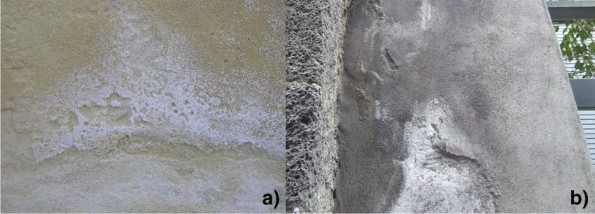
Unlike efflorescence (Photo “a” of the left), water evaporates inside the concrete pores before reaching the surface due to high temperatures or impermeable surface causing Subflorescence (Photo “b” on the right).
As the water disappears, salt crystals continue growing within the pore structure. These crystals expand and generate significant internal pressure.
Risk Level: High
Subflorescence is far more serious because the crystallisation occurs inside the concrete.
Over time, the internal pressure can cause:
- Cracking
- Delamination
- Scaling
- Concrete spalling
- Loss of surface integrity
Unfortunately, this process often remains hidden until visible deterioration has already begun.
2. Carbonation-Driven Calcium Deposits
(Calcium Leaching + Atmospheric CO₂ → Calcite Formation)
These deposits form through a different mechanism. Instead of transporting soluble salts, water dissolves calcium compounds from the cement paste. Once exposed to the atmosphere, the calcium reacts with carbon dioxide to produce calcium carbonate (calcite).
The way the water moves determines the appearance of the deposits.
🌊 Calcite Crusts (Flowstone)
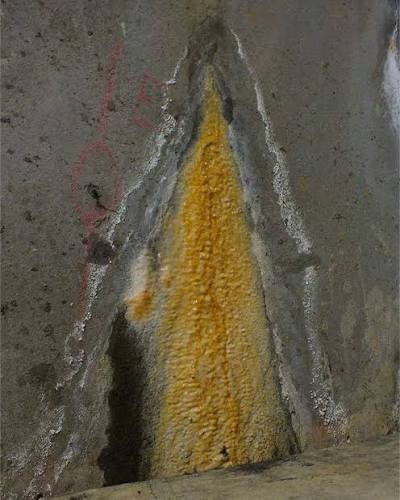
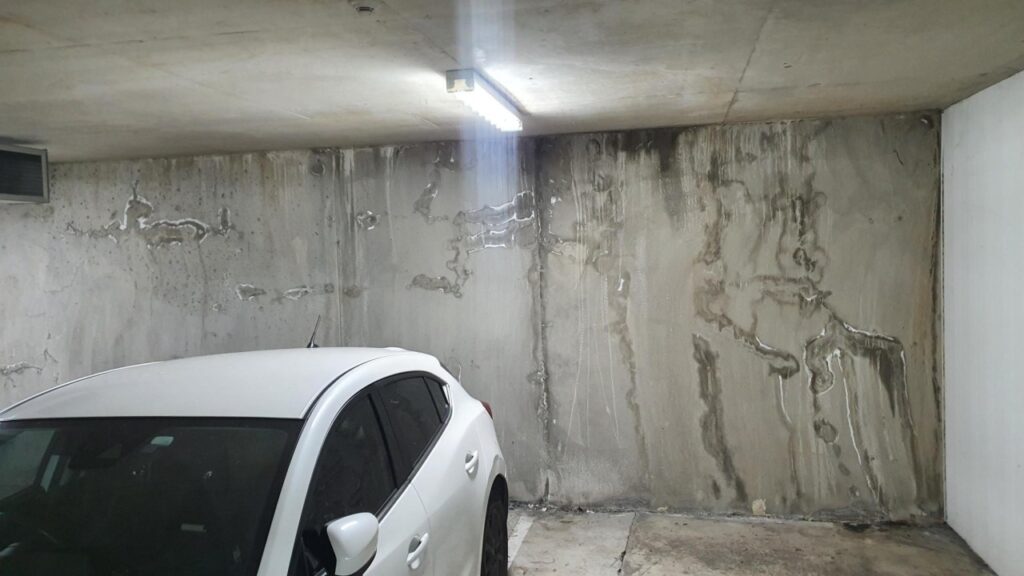
Water flows continuously across concrete walls or slabs, gradually depositing layers of calcite.
Over time, these layers develop into hard white crusts or streaks over the wet cracks, joints, honeycombing.
💧 Calthemite Stalactites
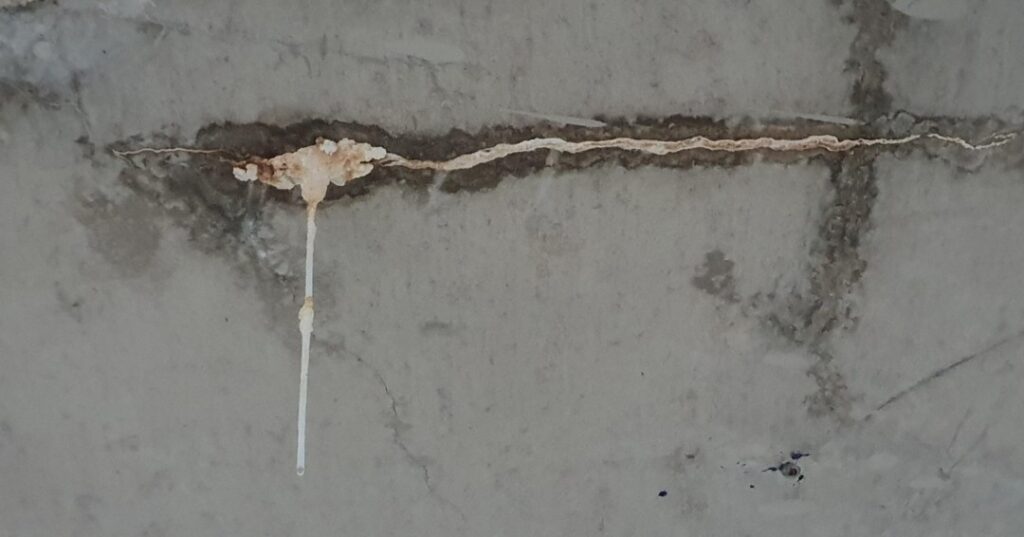
Water slowly drips through cracks, construction joints or penetrations. Each drop deposits a microscopic amount of calcite until hanging mineral formations, known as calthemites Stalactites, begin to develop.
Risk Level: High
Neither calcite crusts nor calthemites Stalactites are the actual problem. Instead, they are strong evidence of ongoing water ingress.
Whenever these deposits are present, the following should be assessed:
- Waterproofing performance
- Source of water ingress
- Reinforcement corrosion
- Concrete deterioration
- Structural durability
Ignoring them allows moisture to continue migrating through the structure, potentially accelerating reinforcement corrosion and concrete spalling.
Why Correct Identification Matters?
Many repair strategies fail because the symptoms are treated instead of the cause. Simply removing the white deposits without understanding how they formed is like repainting a rusted steel beam without removing the corrosion.
A correct diagnosis identifies:
- the source of moisture,
- the transport mechanism,
- the type of mineral deposit,
- the extent of deterioration, and
- the most appropriate repair strategy.
Misdiagnosis can result in unnecessary expenditure, recurring defects, and reduced service life of the structure.
Key Takeaways
✔️ Efflorescence = Usually cosmetic, but evidence that moisture is moving through the concrete.
⚠️ Subflorescence = Hidden salt crystallisation causing internal damage.
🚨 Calcite Crusts and Calthemites = Strong indicators of active water ingress requiring investigation.
Concrete rarely deteriorates without leaving clues. Learning to recognise these mineral deposits allows building owners, engineers and contractors to identify problems early—before minor defects become major remediation projects.
Frequently Asked Questions (FAQ)
Is white powder on concrete always efflorescence?
No. White deposits may be efflorescence, subflorescence (before visible damage becomes apparent), calcite deposits, calthemites Stalactites, or other mineral residues. Correct identification is essential before deciding on a repair strategy.
Is efflorescence dangerous?
Efflorescence is generally cosmetic and does not usually reduce the structural capacity of concrete. However, it confirms that moisture is moving through the material and should not be ignored, particularly in below-ground structures.
What causes white deposits on concrete?
White deposits are typically caused by water transporting dissolved salts or calcium compounds through concrete or masonry. As the water evaporates or reacts with atmospheric carbon dioxide, minerals are deposited on or within the concrete.
What is the difference between efflorescence and subflorescence?
Efflorescence forms on the surface after water evaporates, whereas subflorescence forms within the concrete pores. Because the crystals grow internally, subflorescence can generate expansive pressure that leads to cracking and spalling.
What are calthemites Stalactites?
Calthemites are calcite formations that resemble stalactites. They develop when calcium-rich water slowly drips through cracks or construction joints, depositing calcium carbonate over time.
Do calcite deposits mean my waterproofing has failed?
Not necessarily, but they do indicate that water is migrating through the concrete. The source of the moisture should be investigated to determine whether the waterproofing system, drainage, joints, cracks or penetrations require attention.
Can efflorescence be permanently removed?
The deposits can usually be removed by appropriate cleaning methods. However, unless the source of moisture is addressed, they are likely to reappear.
Can white deposits indicate reinforcement corrosion?
Not directly. However, persistent moisture movement that creates calcite deposits or calthemites can also create conditions favourable for reinforcement corrosion and concrete deterioration. Further investigation is recommended.
How can Baleh Consulting assist in my project?
Baleh Consulting (Follow us on LinkedIn) specialise in forensic waterproofing investigations, below-ground waterproofing design, concrete durability, and remedial engineering. We help building owners, strata managers, architects, engineers, developers, and builders identify the root cause of water ingress and concrete deterioration, providing practical, long-term solutions through expert investigations, technical design, performance solutions, and independent engineering advice. If you’re experiencing persistent leaks or concrete deterioration, we’re here to help you diagnose the problem correctly and protect your asset.
Written by Hacène Baleh (Meet Our Director, LinkedIn)
27/07/2026